

Autumn budget 2026
John Healey delivered his first Budget on 28 October 2026. The headline is that income tax, National Insurance and VAT rates are unchanged, and so are dividend tax rates. The cost has been pushed onto three groups instead: people selling a business, landlords, and savers.
Most of the changes start on 6 April 2027. That gives you roughly five months to act, and for some clients that window is worth tens of thousands of pounds. Below is what changed, who it hits, and what to do about it.
What did not change
- Income tax, National Insurance and VAT rates: unchanged.
- Dividend tax rates: unchanged at 10.75%, 35.75% and 39.35%.
- Corporation tax: main rate stays at 25%, small profits rate at 19%.
- Cash ISA allowance: stays at £20,000. The planned cut to £12,000 has been reversed.
The catch is that income tax and National Insurance thresholds are still frozen until April 2031. Every pay rise or increase in profit is taxed harder than it looks, because more of it lands in the 40% and 45% bands. That matters most for associates, locums and growing sole traders.
Selling your business or practice: BADR limit halved
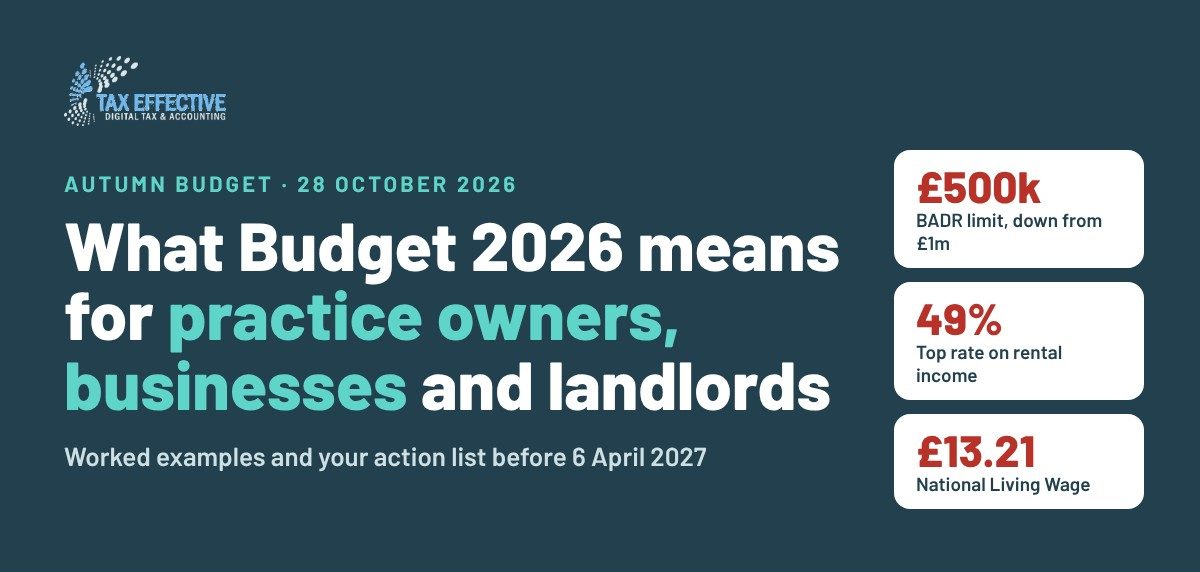
The lifetime limit for Business Asset Disposal Relief falls from £1 million to £500,000 from 6 April 2027. The 18% rate stays the same, but gains above the new limit are taxed at the full 24%. Any BADR you have claimed in the past counts against the limit.
Example: one owner, £1 million qualifying gain
| CGT | |
|---|---|
| Sale before 6 April 2027 | £180,000 |
| Sale after 6 April 2027 | £210,000 |
| Extra tax | £30,000 |
Example: two-partner dental practice, £1.6 million gain split equally
| CGT per partner | |
|---|---|
| Sale before 6 April 2027 | £144,000 |
| Sale after 6 April 2027 | £162,000 |
| Extra tax across both partners | £36,000 |
For tax purposes, a sale usually happens when contracts are exchanged, not when the deal completes. If you are planning to sell or retire in 2027, the date you exchange could decide whether the £1 million limit still applies to you. Expect anti-forestalling rules in the final legislation, so get advice before you restructure anything to beat the deadline.
Founders’ Relief: the Budget also introduced a new 10% CGT rate on up to £10 million of lifetime gains, from 6 April 2027. It is aimed at founders of high-growth, innovative companies, and its design is still being consulted on. Most owner-managed businesses, including dental, GP, veterinary and aesthetics practices, should not plan around it.
Landlords and savers: a second 2% rise
Last year’s Budget already raised tax on property and savings income by 2% from April 2027. This Budget adds a further 2% from the same date.
| Band | Today | From April 2027 |
|---|---|---|
| Basic rate | 20% | 24% |
| Higher rate | 40% | 44% |
| Additional rate | 45% | 49% |
Example: higher-rate landlord with £20,000 rental profit. Tax rises from £8,000 to £8,800, which is £800 more every year.
Practice owners who hold the surgery building personally are hit by this too. If you charge your practice £40,000 a year in rent and you are an additional-rate taxpayer, your tax on that rent rises from £18,000 to £19,600. That is £1,600 more every year. Before April 2027, it is worth comparing personal, company and pension (SIPP or SSAS) ownership of the premises.
HMRC is also consulting on making letting agents and platforms report rental income directly, so unreported rental income will get harder to hide.
Employers: minimum wage up 3.9%
From 1 April 2027:
- National Living Wage (21 and over): £12.71 rises to £13.21 an hour.
- Age 18 to 20: £10.85 rises to £11.27 an hour.
For one full-time employee on the National Living Wage working 37.5 hours a week, the real cost is about £1,150 a year. That is made up of £975 extra pay, £146 extra employer NIC at 15% and £29 extra pension at 3%. A dental practice with six nurses and receptionists on the National Living Wage is looking at roughly £6,900 a year more.
Separately, under the Employment Rights Act, the qualifying period for unfair dismissal claims drops to six months from 1 January 2027. Probation reviews for new and trainee staff matter far more than they used to.
Sole traders, associates and side income
- Trading allowance: rises from £1,000 to £3,000 from 6 April 2027. That covers side income such as teaching, content or small ventures.
- Mileage: the 55p rate for the first 10,000 business miles is now permanent, and the rate above 10,000 miles rises from 25p to 35p. A higher-rate sole trader driving 15,000 business miles a year can claim £500 more, worth about £210 in tax and NI. This helps multi-site associates, locum GPs and mobile vets.
- Payments on account: from April 2029, self-assessment payments on account move to smaller, more regular instalments instead of two large bills each January and July.
- Fuel duty: the 5p cut is extended to 1 July 2027.
Equipment and capital allowances
| Allowance | Today | After Budget 2026 |
|---|---|---|
| Full expensing (companies) | 100% | 100% |
| Main rate first-year allowance | 40% | 50% |
| Main rate writing down allowance | 14% | 12% (from April 2027) |
For most businesses, the £1 million Annual Investment Allowance still gives full relief on equipment in the year of purchase. That covers a CBCT scanner, an intraoral scanner or a full surgery fit-out, whether you trade as a company, partnership or sole trader. The cut to the writing-down allowance mainly affects company cars and balances already in your pool. The Finance Bill will set the start date for the 50% first-year allowance.
Business rates (England)
From April 2027:
- The threshold for 100% Small Business Rate Relief on retail, hospitality and leisure properties rises from £12,000 to £18,000. The government says 70,000 more businesses will pay nothing.
- Other retail, hospitality and leisure properties get a real-terms freeze for two years.
- Pubs, music venues and social clubs get an extra 20% off.
On the horizon
- April 2028: new rules on how company distributions are taxed. These cover share buybacks, capital reductions and value taken out after holding company or share-for-share restructures. If you plan to extract value from your company this way, plan before the rules take effect.
- October 2027: online marketplaces must collect VAT for UK sellers making more than £90,000 of sales through them.
- April 2029: VAT e-invoicing becomes mandatory.
- HMRC enforcement: 670 more compliance officers, and a new power to recover smaller tax debts directly from people who can pay but repeatedly don’t.
What to do before 6 April 2027
- Selling or retiring in the next 18 months? Get a valuation and a CGT calculation now. When you exchange contracts, it could change your tax bill by tens of thousands.
- Landlords and practice owners who hold property personally: rerun the numbers on personal, company and pension ownership at 44% and 49%.
- Employers: update your 2027/28 payroll budget for £13.21 an hour, and tighten your probation process before January.
- Company owners: if you are planning a buyback, capital reduction or holding company exit, start before the April 2028 rules land.
- Big equipment purchases: time them for the accounting period where your profits and your tax rate are highest.
Talk to us
If any of these changes affect you, we will run your actual numbers and tell you what to do before April.
Call 0207 096 1192 or email info@taxeffectiveltd.com.
Download the Budget 2026 summaries
Business owners and landlords (PDF)Healthcare practices (PDF)
Source: HM Treasury, Budget 2026, published 28 October 2026. Measures are subject to Finance Bill 2026-27 and may change. The examples are illustrative: they assume all income or gain falls in the band shown and ignore allowances and reliefs. This article is general information, not personal advice. Please speak to us before acting on it.

